Carbon projects based on forestry and silvopastoral solutions integrate environmental, productive, economic, and social aspects that are difficult to fully understand solely through classroom instruction. The opportunity to tour a facility, learn about its operations, and analyze how a certification project is carried out helps future professionals gain a better understanding of the specific challenges involved in its implementation.
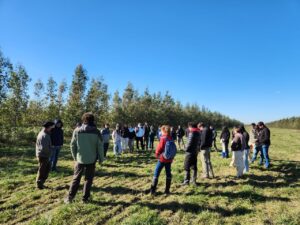
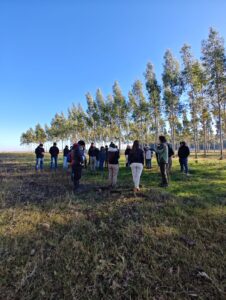
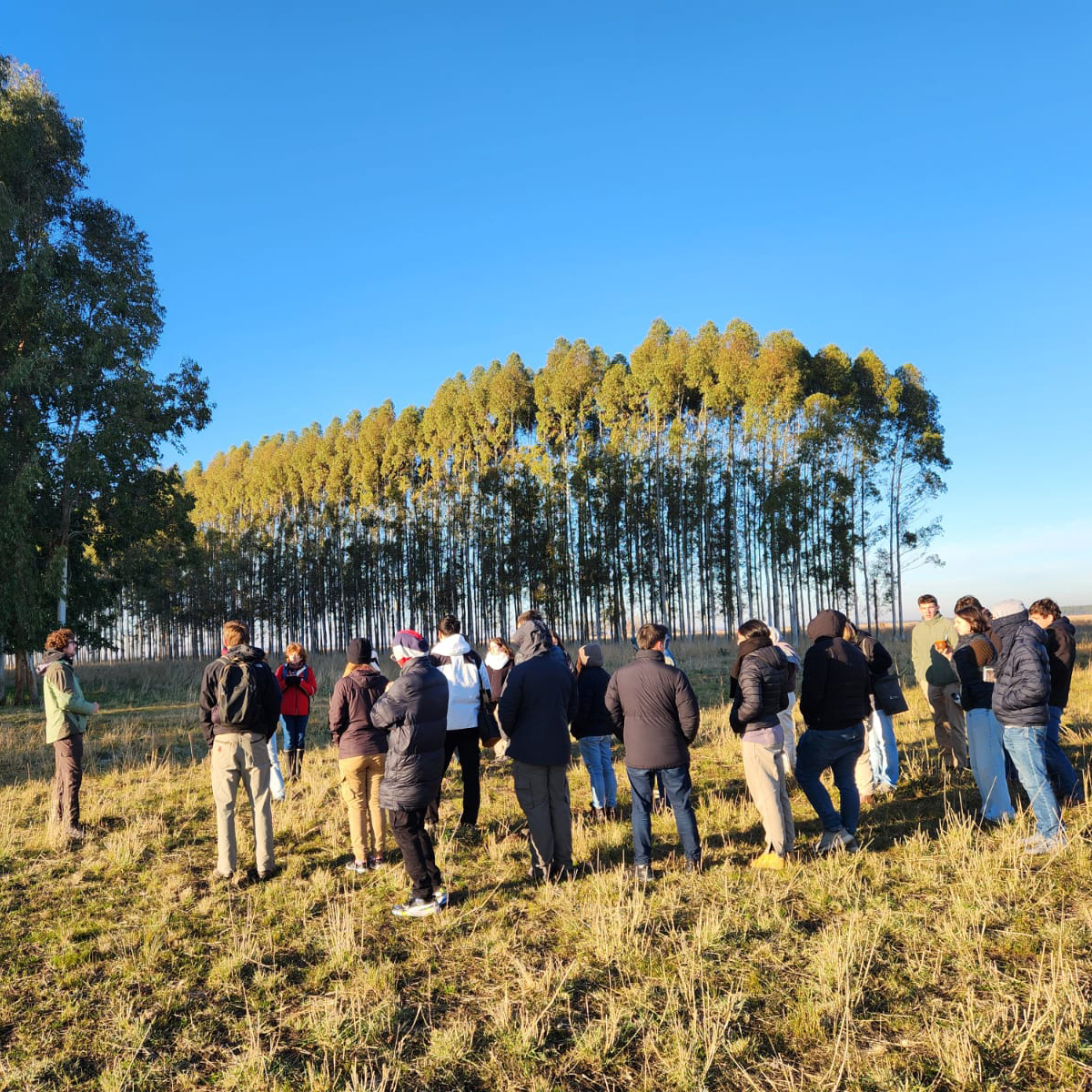
With that goal in mind, ProSustentia participated in a field trip organized by the elective course “Silvopastoral Management Workshop” offered by the Faculty of Agronomy at the University of Buenos Aires (FAUBA), held at Estancia La Negra, where the forestry project is being carried out VCS Project ID 5176, which is currently undergoing certification under Verra’s Verified Carbon Standard (VCS).
During the event, we shared with students in the Bachelor’s programs in Environmental Sciences, Agricultural Engineering, and Agricultural Economics an introduction to how carbon markets work, the role of Nature-based Solutions (NbS), and the main stages of a carbon project, from its design to the certification of greenhouse gas removals. The visit also provided an opportunity to tour the facility and gain firsthand knowledge of the characteristics of the silvopastoral system, the management practices in place, and some of the technical aspects considered during the project’s development and monitoring.
Linking Academia with Practice
The growing demand for professionals specializing in climate change, carbon markets, and sustainable natural resource management highlights the need to create opportunities for exchange between academic training and professional practice. In this regard, these types of activities complement university education with practical experiences, facilitating the analysis of real-world projects, the discussion of methodologies, and the exchange of ideas with technical teams involved in their development.
At ProSustentia, we particularly value these opportunities for collaboration with universities and training centers, as we are convinced that strengthening the ties between academia and the professional sector contributes to the development of technical skills needed to support the transition to a low-emission economy and more sustainable management of natural resources.
We would like to thank the faculty of the FAUBA Silvopastoral Management Workshop for the invitation and the students for their interest and participation throughout the event.